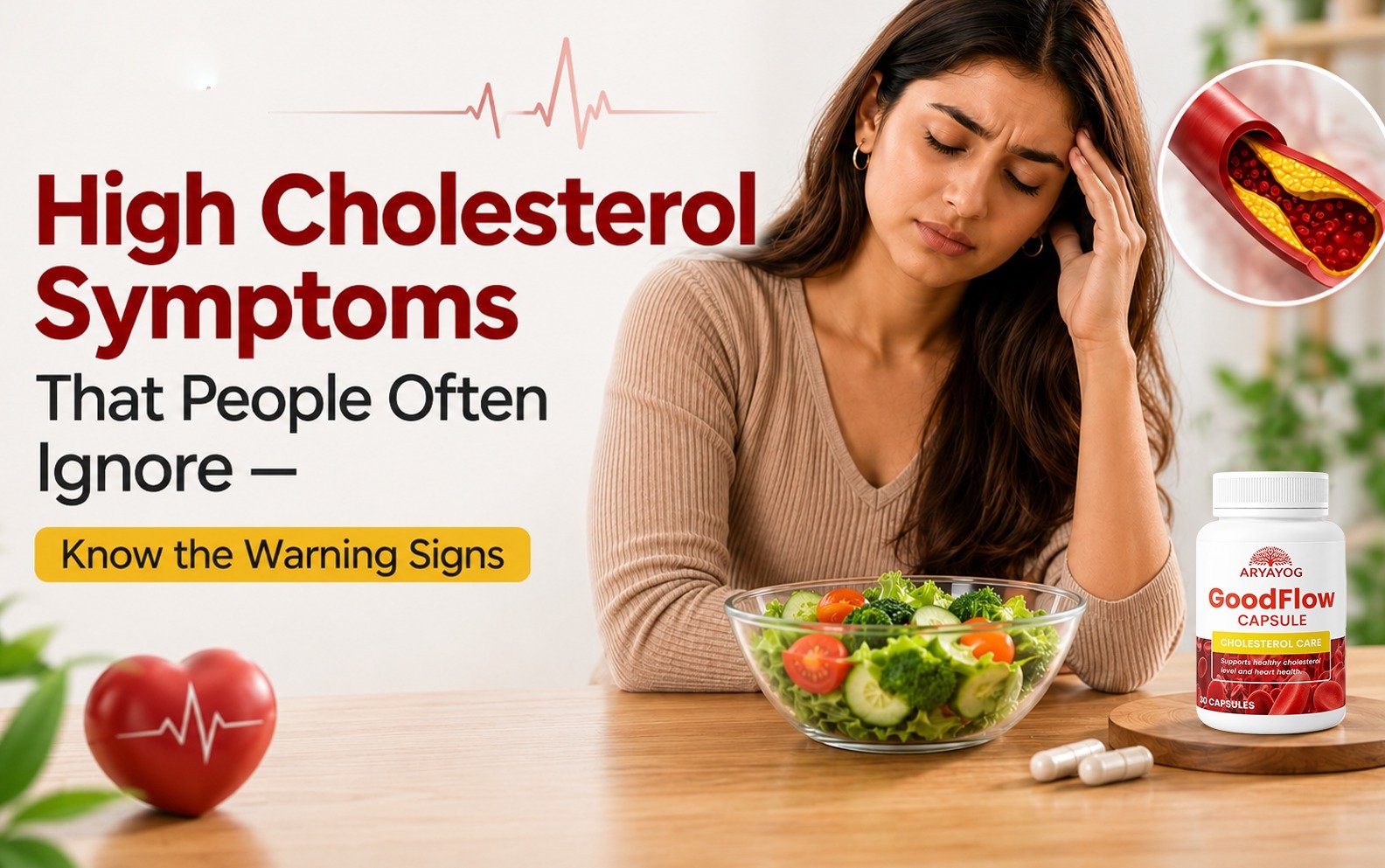
High Cholesterol Symptoms | Warning Signs & Natural Support
High Cholesterol Symptoms That People Often Ignore
High cholesterol is often called a “silent problem”—and the main reason is that it usually does not show any obvious symptoms. Many people do not even realize they have high cholesterol until they undergo a routine blood test.
However, in some cases—especially when cholesterol levels are very high or when artery disease has already started developing—certain warning signs or related symptoms may appear.
If you are searching for high cholesterol symptoms, bad cholesterol signs, or how to reduce cholesterol, this guide is for you.
What Is High Cholesterol?
Cholesterol is a waxy, fat-like substance that the body needs for producing hormones and performing essential functions. However, when LDL cholesterol (bad cholesterol) becomes too high in the blood, it can lead to plaque buildup in the artery walls.
Over time, this plaque can narrow the arteries and reduce blood flow, increasing the risk of cardiovascular diseases.
That is why checking only total cholesterol is not enough. A healthcare professional usually evaluates cholesterol levels through a lipid profile blood test.
7 High Cholesterol Symptoms and Warning Signs
1. Usually No Clear Symptoms
This is the most important point.
High cholesterol usually does not cause any direct symptoms.
You may feel completely normal and still have high LDL cholesterol. This is why regular cholesterol testing is important, especially if you have a family history of high cholesterol, heart disease, diabetes, or other risk factors.
Meaning: Feeling fine does not guarantee healthy cholesterol levels.
2. Chest Pain Should Not Be Ignored
High cholesterol itself does not directly cause chest pain. However, long-term high cholesterol can lead to plaque buildup and increase the risk of coronary heart disease.
In coronary heart disease, chest pain, pressure, or tightness may occur during physical activity or exertion.
If chest pain is severe, occurs at rest, or is accompanied by other heart attack symptoms, seek emergency medical care immediately.
3. Shortness of Breath
Shortness of breath is often linked to aging, stress, weight, or low fitness levels.
However, if breathlessness occurs repeatedly—especially during physical activity—it should not be ignored.
It may be associated with coronary heart disease or other cardiovascular conditions linked to plaque buildup.
4. Unusual Fatigue
Sudden or unexplained tiredness should not be ignored.
However, fatigue is not a specific symptom of high cholesterol itself. It can be linked to many health conditions. If fatigue persists or occurs along with chest discomfort, breathlessness, dizziness, or other symptoms, medical evaluation is important.
5. Yellowish Fatty Bumps on Skin
Very high cholesterol—especially in people with inherited conditions like familial hypercholesterolemia—can cause xanthomas, which are fatty deposits that appear as yellowish bumps on areas like elbows, knees, hands, ankles, or buttocks.
These should not be ignored as a cosmetic issue alone. A medical evaluation is recommended.
6. Grayish-White Ring Around the Eyes
Some people may develop a corneal arcus, a grayish-white ring around the cornea.
It can be associated with high cholesterol or lipid disorders, especially when it appears at a younger age. However, it can also occur naturally with aging, so it does not always indicate high cholesterol.
If you notice such changes, an eye examination and blood test may be helpful.
7. Symptoms of Heart Attack or Stroke
These are not direct symptoms of high cholesterol, but untreated high cholesterol can contribute to plaque buildup, increasing the risk of heart attack and stroke.
Emergency warning signs include:
Chest pressure or pain
Pain spreading to arm, shoulder, neck, or jaw
Sudden shortness of breath
Cold sweating
Sudden dizziness
Sudden weakness
Difficulty speaking
Sudden numbness (especially on one side of the body)
If these symptoms appear, do not wait—seek emergency medical help immediately.
How Is High Cholesterol Detected?
The most reliable method is a blood test (lipid profile).
A lipid profile measures different types of cholesterol and triglycerides. A healthcare professional interprets the results along with your age, medical history, family history, blood pressure, and lifestyle factors.
Waiting for symptoms is not a smart approach.
Why Regular Testing Is Important
Because high cholesterol can remain silent for years.
A person may look healthy and feel healthy but still have elevated LDL cholesterol.
Common Risk Factors for High Cholesterol
Cholesterol levels can be influenced by several factors, including:
Unhealthy diet
High intake of saturated fats
Physical inactivity
Overweight or obesity
Smoking
Family history of high cholesterol
Diabetes
High blood pressure
Increasing age
Certain medical conditions or medications
Family history is especially important, as inherited conditions like familial hypercholesterolemia can cause very high LDL levels.
How to Reduce Cholesterol Naturally
If you want to focus on natural cholesterol control, lifestyle changes are the foundation.
1. Follow a Heart-Healthy Diet
Include more:
Vegetables
Fruits
Whole grains
Pulses and legumes
Nuts and seeds
High-fiber foods
At the same time, limit processed foods and excessive saturated fats.
2. Exercise Regularly
Regular physical activity supports overall heart health.
You can choose walking, cycling, swimming, yoga, or strength training—whatever you can do consistently.
Consistency matters more than intensity.
3. Maintain a Healthy Weight
If you are overweight, gradual and sustainable weight loss can improve cholesterol levels and overall heart health.
Avoid crash diets and focus on balanced nutrition.
4. Avoid Smoking
Smoking negatively affects heart and blood vessel health. Quitting smoking is one of the most important steps for improving cardiovascular health.
Ayurvedic Support for Cholesterol Management
Along with diet and exercise, some people prefer Ayurvedic wellness support for cholesterol management.
Aryayog GoodFlow Capsule is positioned as an Ayurvedic supplement that supports healthy cholesterol levels and heart wellness.
Who Can Consider GoodFlow Capsule?
It may be considered as part of a wellness routine focused on:
Supporting healthy cholesterol levels
Supporting cardiovascular wellness
Complementing a heart-conscious lifestyle
Supporting overall metabolic balance
Maintaining daily wellness habits
However, it should be understood as complementary support, not a replacement for prescribed medication, diagnosis, or medical advice.
Healthy Routine with GoodFlow Capsule
For better cholesterol management, combine:
Balanced diet + regular exercise + healthy weight + good sleep + regular testing + medical guidance
Can Ayurvedic Medicine Reduce High Cholesterol?
Ayurvedic products may support wellness, but they should not be considered a guaranteed cure for high cholesterol.
If your cholesterol is high or you are on medication, do not stop or change treatment without consulting your doctor.
The right approach depends on your LDL levels, overall risk, and medical history.
7 Simple Cholesterol Control Tips
Get regular lipid profile tests
Reduce saturated and processed foods
Eat more fiber-rich foods
Stay physically active
Maintain a healthy weight
Avoid smoking
Follow medical advice
These habits support long-term heart health.
When Should You See a Doctor?
Do not wait for symptoms if you have risk factors.
Consult a doctor if you:
Have a family history of high cholesterol
Have diabetes or high blood pressure
Previously had high LDL levels
Are advised to monitor cholesterol
Notice unusual skin fat deposits
Experience cardiovascular symptoms
Remember: high cholesterol often has no symptoms, so testing is essential.
Final Takeaway
High cholesterol symptoms are often not visible—which is why it is dangerous to ignore them.
Most people do not feel any changes even when LDL cholesterol is high. In some cases, physical signs like xanthomas or corneal arcus may appear, while chest pain or breathlessness may indicate heart disease rather than cholesterol itself.
The best approach is simple:
Test → Understand risk → Improve lifestyle → Follow medical advice → Protect heart health
For those interested in Ayurvedic cholesterol support, Aryayog’s GoodFlow Capsule can be considered as a complementary wellness option.
Your heart health should never wait for symptoms.
Frequently Asked Questions
1. What are the symptoms of high cholesterol?
High cholesterol usually has no obvious symptoms. It is mostly detected through a blood test. In rare cases, very high cholesterol may cause skin or eye changes.
2. Can high cholesterol cause chest pain?
Not directly. However, it can contribute to heart disease, which may cause chest pain or discomfort.
3. How can bad cholesterol be reduced?
A healthy diet, regular exercise, weight management, quitting smoking, and medical treatment can help reduce cholesterol.
4. Can cholesterol be high without symptoms?
Yes, very commonly. That is why regular screening is important.
5. Is GoodFlow Capsule useful for cholesterol?
It is positioned as an Ayurvedic wellness supplement for heart and cholesterol support. It should be used as complementary support, not a replacement for medical treatment.
6. Which test is used for cholesterol?
A lipid profile blood test is used to measure cholesterol levels and assess heart risk.